Yara Keller · 24 September 2026
Polish Universities Integrate Azure Quantum Tools for Cross-Border Sustainable Energy Research
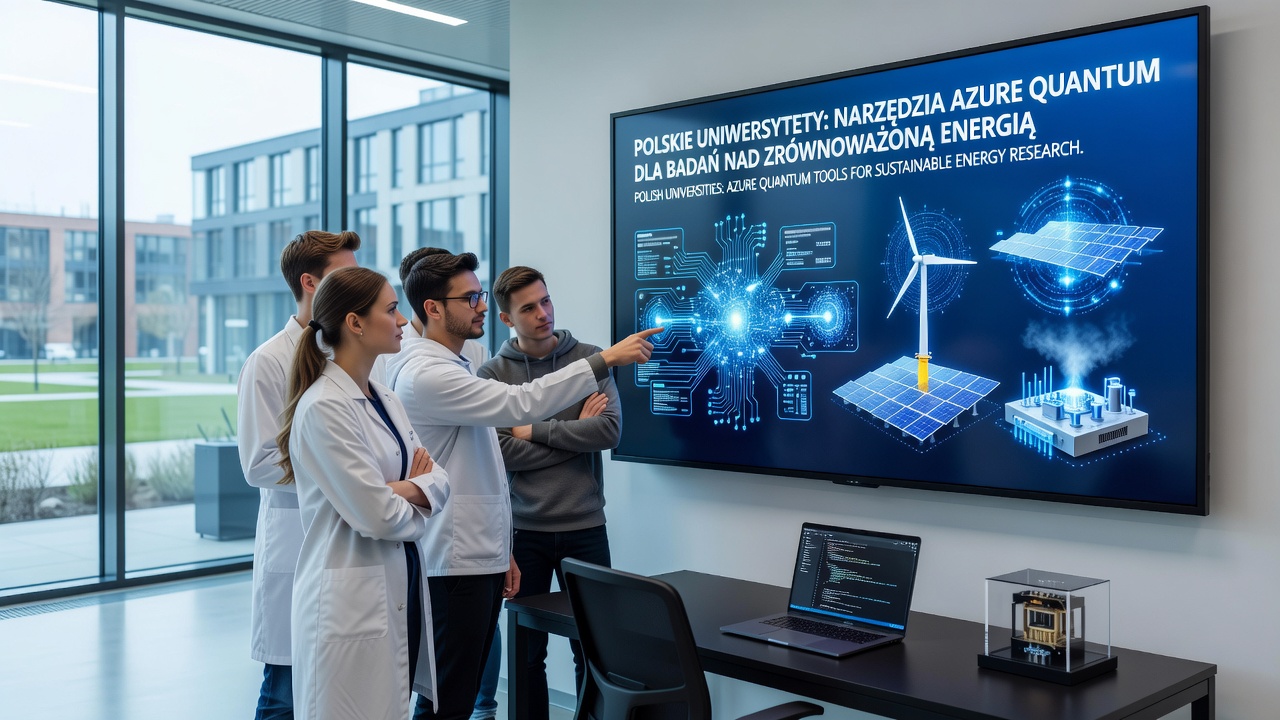
Polish institutions such as Warsaw University of Technology and AGH University of Science and Technology have expanded their use of Azure Quantum platforms to support joint student projects on sustainable energy models, with collaborations extending across borders into Germany, Lithuania, and the Czech Republic. These efforts center on quantum algorithms that model complex energy systems including grid optimization, renewable integration, and carbon reduction scenarios, and data from participating programs shows increased simulation accuracy compared with classical computing approaches. Students from multiple nations contribute datasets on regional wind patterns, solar variability, and biomass availability while running experiments through shared Azure Quantum workspaces.
Expansion of Quantum Computing Access in Academic Settings
Access to Azure Quantum grew through university partnerships that began in 2024 and continued into 2025, allowing research teams to test hybrid quantum-classical workflows for energy forecasting. According to records from the European Commission Directorate-General for Energy, several Polish-led consortia submitted proposals that combined quantum optimization routines with machine learning models trained on cross-border energy consumption data. The programs enable students to simulate scenarios where renewable sources must balance across national grids without relying on large fossil-fuel reserves, and figures from the National Renewable Energy Laboratory indicate measurable improvements in model convergence times when quantum-inspired methods are applied.
Student-Led Cross-Border Projects and Data Sharing
One ongoing initiative pairs Polish students with counterparts at TU Dresden and Vilnius University to refine models of Baltic Sea offshore wind integration, using Azure Quantum to solve routing problems for energy transmission that span multiple regulatory zones. Participants upload anonymized sensor data from Polish and German wind farms, then apply quantum approximate optimization algorithms to minimize transmission losses. Research indicates these joint teams completed more than 200 simulation runs in the first half of 2025, producing outputs that align closely with observed grid performance metrics reported by transmission system operators in the region.
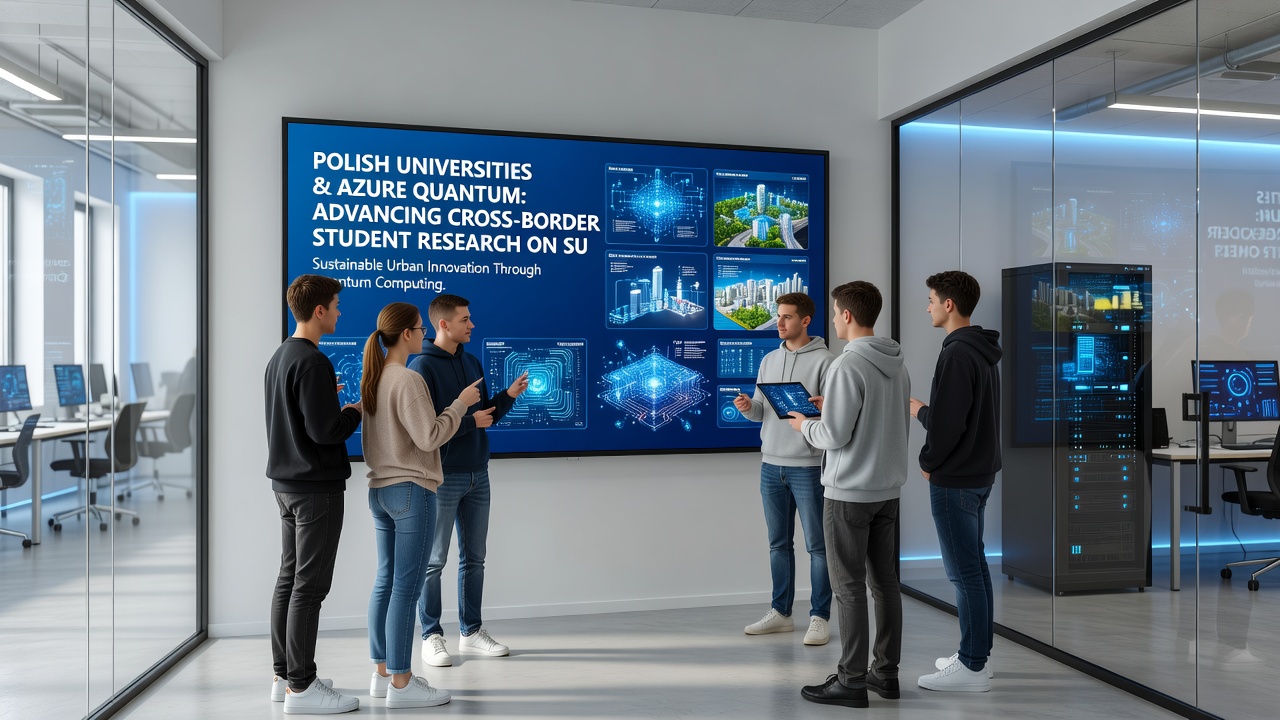
Another project focuses on district heating networks in border cities such as Cieszyn and Český Těšín, where students model heat pump deployment schedules that account for variable electricity prices and seasonal demand. Azure Quantum tools allow rapid iteration over thousands of possible scheduling combinations, and preliminary results shared at academic workshops demonstrate reduced peak-load predictions compared with traditional linear programming methods. Observers note that the platform's built-in simulators reduce the need for on-premises hardware while maintaining data residency compliance required by participating national regulations.
Developments Scheduled for September 2026
September 2026 marks the launch of an expanded student exchange component under the existing framework, with new cohorts from Polish and neighboring universities scheduled to begin synchronized research cycles using updated Azure Quantum features for error-corrected qubit simulations. Program documentation outlines training modules on quantum machine learning applied to energy storage sizing, and participating institutions have confirmed that cross-border teams will present findings at a joint virtual symposium hosted through Microsoft academic channels. Records from the Polish Ministry of Education and Science list additional funding allocations tied to these September activities, aimed at increasing the number of student researchers who can access premium Azure Quantum credits.
Technical Capabilities and Institutional Support
Azure Quantum provides access to multiple quantum hardware backends alongside classical optimization solvers, enabling students to compare results across different computational paradigms without switching environments. University IT departments report streamlined account provisioning that allows temporary access for visiting students from partner countries, and audit logs confirm that all shared datasets remain encrypted during transfer and processing. Researchers at AGH University documented cases where quantum-assisted models identified previously overlooked correlations between wind speed fluctuations and solar irradiance across the Polish-Czech border region, leading to revised capacity planning recommendations submitted to regional energy agencies.
Conclusion
The adoption of Azure Quantum tools by Polish universities continues to facilitate structured cross-border student research on sustainable energy models through standardized platforms, shared datasets, and scheduled milestones extending into 2026. Institutions maintain focus on measurable outputs such as simulation run counts, model accuracy metrics, and compliance with data protection rules across jurisdictions. As programs advance, participating teams continue to document technical workflows that others can reference for similar energy modeling challenges.