Riley Wagner · 8 October 2026
Polish Higher Education Teams Deploy Cloud Tools for Virtual Reality Medical Training Simulations
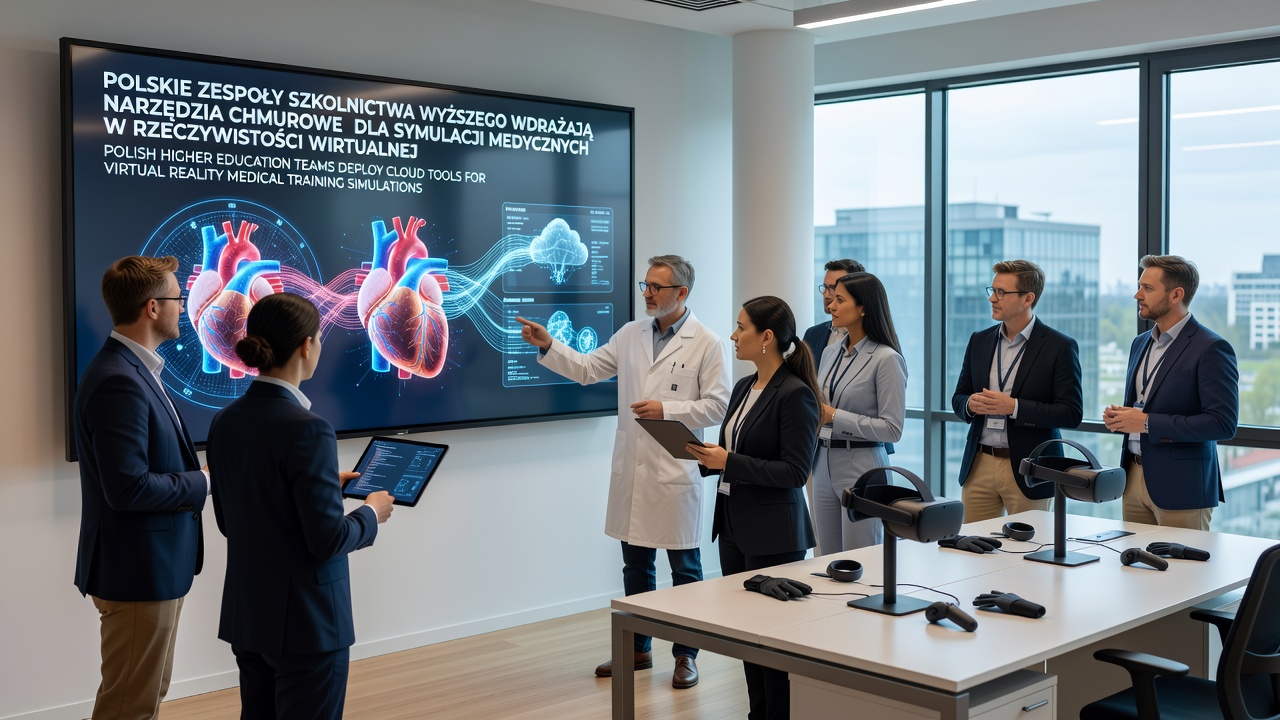
Polish universities have expanded their use of cloud platforms to support virtual reality applications in medical education programs, with several institutions reporting active deployments that integrate scalable computing resources for immersive training environments. Data from the Polish Ministry of Education and Science shows that at least twelve higher education institutions began or scaled such initiatives between 2024 and 2026, focusing on disciplines including surgery, nursing, and emergency response. These efforts rely on remote cloud infrastructure to handle the high computational demands of real-time rendering and multi-user sessions, allowing students to practice procedures without physical equipment constraints.Cloud Infrastructure Supporting VR Deployments
Multiple Polish medical faculties now route VR workloads through centralized cloud services that provide on-demand GPU access and data synchronization across campuses. This setup enables simultaneous sessions for dozens of users while maintaining consistent performance levels, according to technical reports issued by participating universities. Institutions coordinate these resources through national education networks that prioritize low-latency connections between simulation servers and end-user devices. Observers note that such arrangements reduce the need for each university to maintain dedicated high-end hardware clusters on site, shifting maintenance responsibilities to cloud providers.
Implementation timelines accelerated during 2025 when several consortia received funding allocations tied to digital skills development targets. By October 2026, pilot programs at universities in Warsaw, Kraków, and Wrocław had completed initial rollout phases, with enrollment data indicating over 2,400 students accessing VR modules in the preceding academic year. Figures from the European Education Area progress reports place Poland among the faster adopters of combined cloud and immersive technologies in health sciences curricula across the EU.
Medical Training Applications and Content Development
Training scenarios cover a range of procedures from basic anatomical exploration to complex surgical rehearsals that incorporate haptic feedback integration. Content libraries draw on standardized medical datasets hosted in cloud repositories, allowing instructors to update scenarios rapidly in response to new clinical guidelines. Research indicates that cloud-based distribution supports version control across multiple sites, ensuring all participants work with identical module revisions. Universities collaborate with software developers to create scenario packs tailored to Polish regulatory requirements for medical licensing examinations.
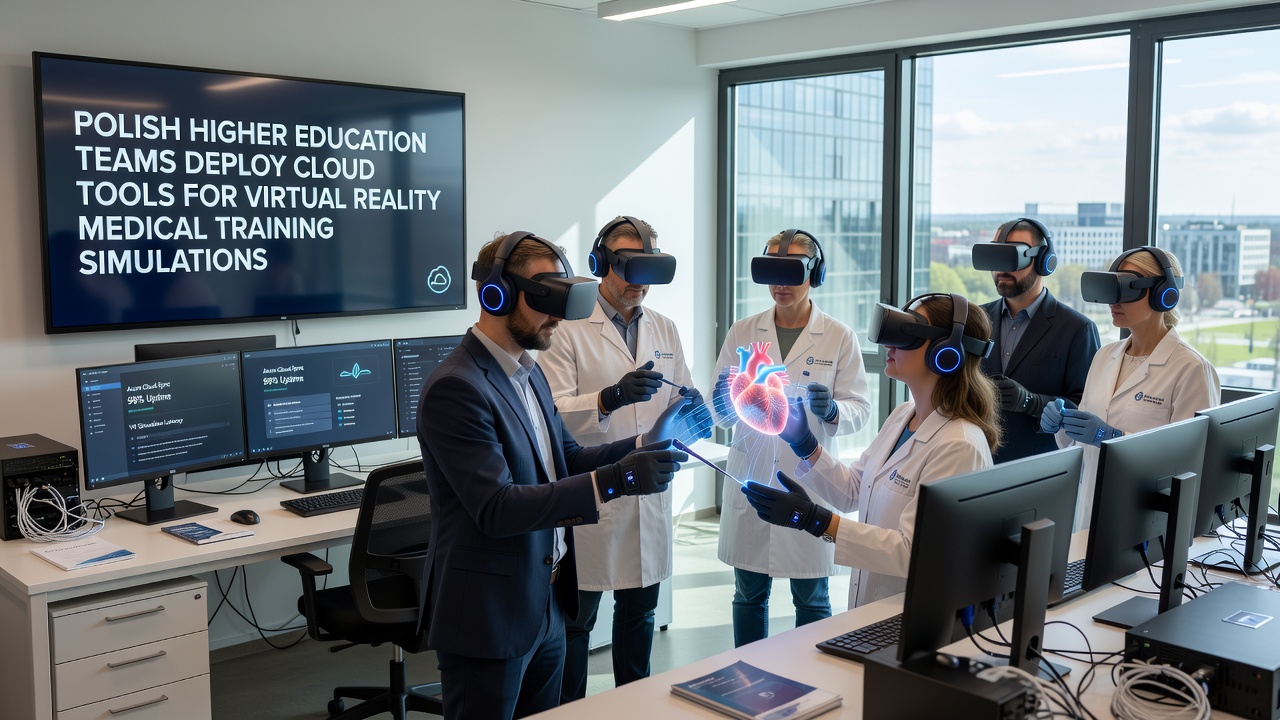 One documented case involves a multi-university project that developed a shared VR platform for trauma response training. Participants log into cloud-hosted environments where they manage virtual patients while system analytics track decision sequences and timing metrics. Similar initiatives have emerged for radiology interpretation and anesthesiology monitoring, with progress tracked through integrated assessment dashboards. Those overseeing these projects report that cloud scalability permits expansion from single-user prototypes to cohort-wide exercises without hardware procurement delays.
Integration with Existing Academic Systems
Polish higher education teams have aligned VR cloud tools with existing learning management systems to streamline access and record-keeping. Student authentication flows through institutional identity providers, while session data feeds directly into gradebooks and competency portfolios. This linkage supports compliance with national accreditation standards that require documented practical training hours. Data synchronization occurs through secure APIs that meet data protection requirements outlined in EU regulations.
Faculty development programs accompany these deployments, offering workshops on scenario design and performance analytics interpretation. Training records from 2025 show participation from over 180 instructors across partner institutions. External evaluations conducted by independent research bodies have examined platform stability during peak usage periods, confirming uptime metrics above 99 percent during scheduled academic sessions. Such measurements appear in technical summaries shared among consortium members.
Cross-Institutional Collaboration Patterns
Consortia arrangements allow smaller faculties to access advanced simulation content developed at larger research universities. Resource pooling occurs through cloud tenancy models that allocate storage and compute credits according to agreed participation levels. This structure has enabled joint curriculum projects involving institutions from different regions of Poland, with shared modules covering topics such as pediatric emergency protocols and orthopedic assessment techniques. Coordination meetings held in early 2026 established common data standards for simulation outcomes to facilitate comparative studies.
International partnerships have supplemented domestic efforts, with some programs exchanging scenario templates with counterparts in other European countries. These exchanges rely on cloud-based repositories that maintain version histories and usage analytics. Reports from participating organizations highlight reduced duplication of development work and faster iteration cycles when content is hosted centrally rather than locally.
Conclusion
Polish higher education institutions continue to refine their approaches to cloud-supported VR medical training as usage data accumulates and technical capabilities advance. Current deployments demonstrate how remote infrastructure supports consistent access to complex simulations across multiple sites while meeting regulatory and academic requirements. Ongoing monitoring by national and European bodies will track further scaling and integration outcomes through subsequent academic cycles.